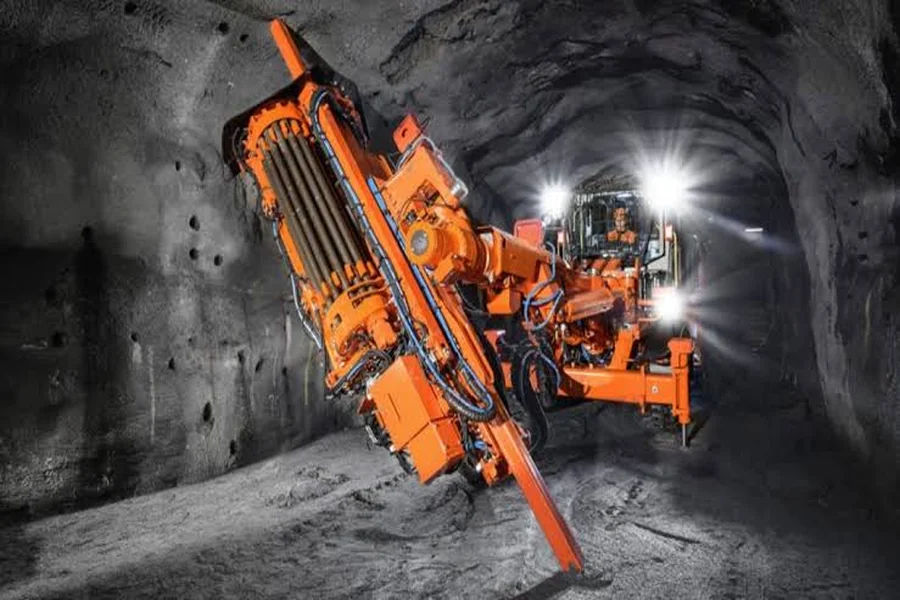

Drilling is the starting point for almost every activity in an underground mine. Development drilling advances tunnels, production drilling breaks ore, and bolting rigs drill holes for ground support. For decades, these tasks depended entirely on skilled operators working at the face. Today, automation is changing how underground drilling is carried out. From automated boom positioning to fully autonomous drilling of complete patterns, automation is helping mines become safer, more consistent and more productive.
Table Of Content
Why automation is gaining ground
Underground mines face mounting pressures. Orebodies are getting deeper, ground conditions are becoming more challenging and experienced operators are increasingly difficult to recruit and retain. At the same time, mining companies are under pressure to improve safety, reduce costs and increase output. Automation addresses many of these challenges at once, allowing drilling to continue more consistently, with fewer people exposed to hazardous conditions.
Levels of drilling automation
Drilling automation is not a single technology but a range of capabilities that can be introduced gradually. At the most basic level, assisted functions help operators position booms accurately and maintain optimal drilling parameters. Computerised drill rigs can follow digital drill plans, guiding each boom to the correct position and angle for every hole.
At higher levels, rigs can drill a single hole or an entire pattern automatically, with the operator supervising rather than controlling each movement. The most advanced systems allow rigs to drill complete rounds or production fans autonomously, while operators monitor several machines from a remote control room, often on the surface.
Making use of every available hour
One of the biggest productivity benefits of automation is the ability to use time that would otherwise be lost. In many underground mines, drilling stops during shift changes, meal breaks and blasting clearance periods. Automated rigs can continue working during these windows, drilling holes while crews are away from the face. Over weeks and months, this additional drilling time can significantly increase metres drilled and tonnes produced.
Remote supervision also reduces the time lost travelling to and from the working face. Operators can move between machines in different parts of the mine simply by switching screens in the control room.
Consistency and precision
Automated drilling delivers a level of consistency that is difficult to achieve manually. Every hole is drilled according to plan, at the correct angle, depth and position. This precision leads to better blasting results, more uniform fragmentation and smoother tunnel profiles. In development, it reduces overbreak and the need for additional ground support. In production, it helps control dilution and improve ore recovery.
Automated systems also adjust drilling parameters in real time to suit changing rock conditions, protecting drilling tools from excessive wear and reducing the risk of stuck rods or damaged bits. This can lower consumable costs and extend the life of components.
Improving safety underground
Safety is one of the strongest arguments for automation. Drilling at the face exposes operators to risks such as rockfalls, dust, noise and vibration. By moving operators into protected cabins, or into control rooms far from the face, automation significantly reduces their exposure to these hazards. Automated systems also reduce the repetitive physical strain associated with manual drilling, helping to prevent fatigue-related incidents.
The power of drilling data
Automated drill rigs generate detailed data for every hole drilled. Measure-while-drilling systems record parameters such as penetration rate, feed pressure and rotation pressure, providing insight into rock conditions. This information can be used to identify weak zones, refine blast designs and plan ground support. Combined with data on machine performance and utilisation, it helps mine planners and engineers continuously improve drilling and blasting practices.
Integrating automation into operations
Successful automation requires more than advanced equipment. Reliable underground communications networks are needed to connect machines with control rooms. Mine planning processes must be adapted so that digital drill plans are accurate and available when needed. Maintenance teams must be trained to service automated systems, and operators must learn new skills in remote supervision and data interpretation.
Many operations introduce automation in stages, starting with assisted functions and moving towards higher levels as experience and confidence grow. Choosing underground drilling equipment designed with automation in mind, and supported by strong training and service, helps make this journey smoother.
The changing role of the operator
Automation does not remove the need for skilled people. Instead, it changes the nature of the work. Operators become supervisors of automated processes, responsible for monitoring several machines, intervening when needed and ensuring quality. This requires new skills, including familiarity with digital systems and data. For many workers, it also offers a safer, more comfortable working environment, which can help attract new talent to the industry.
Overcoming challenges
Adopting drilling automation comes with challenges. The initial investment in equipment, infrastructure and training can be significant. Underground networks must be robust enough to support reliable communication. Changing established working practices takes time and effective change management. However, operations that have embraced automation often report improvements in productivity, safety and drilling quality that justify the investment.
The next step forward
Underground drilling automation is rapidly moving from innovation to industry standard. As technology continues to advance, automated drilling is likely to become even more capable, integrating with other automated machines such as loaders and bolting rigs to create highly coordinated operations. For mines seeking to improve efficiency, safety and consistency, automation represents the natural next step in the evolution of underground drilling.