

A posture corrector can be a very useful wearable for everyday posture support but there is a key detail that many people tend to overlook in a posture corrector which is that the right fit matters as much as the right posture-support product.
Table Of Content
- What Happens When Your Fit Goes Wrong?
- If Posture Corrector Fits Too Tight
- If Posture Corrector Fits Too Loose
- Importance Of Balance In Support & Flexibility
- Step By Step Guide To Get The Right Size & Fit
- Grab A Measuring Tape
- Stand Tall & Breathe Easy
- Quick Checklist For Perfect Support, Comfort & Breathability
- Red Flags One Should Avoid In A Posture Corrector
- Daily Habits To Work On
- Summary
- FAQs
- Ques. Should I choose the size of the posture corrector based on my general clothing size?
- Ques. How tight should I use a posture corrector?
- Ques. Should I wear the posture corrector with a loose fit?
Picking one which is extremely tight may restrict the normal movement and choosing the one with a somewhat loose fit may not be able to provide you the support the body needs.
The main objective of finding the right posture corrector that gently assists you to go about your day comfortably is a big challenge.
However, getting the right size and fit doesn’t have to be complicated at all. This guide breaks down the right approach to the correct sizing so that you can find a supportive posture corrector without feeling it like a struggle.
What Happens When Your Fit Goes Wrong?
The wrong size can actually make wearing a posture corrector uncomfortable as well as you may want to discontinue its use on a daily basis.
If Posture Corrector Fits Too Tight
A posture corrector which comes with a tight fit can cause unnecessary pressure around the shoulders, chest, back as well as underarms. You are likely to notice
- Digging straps
- Pressure around chest
- Breathing difficulty
- Restricted should movement
- Numbness
- Tingling
- Skin irritation
- Repeated rubbing
If Posture Corrector Fits Too Loose
A posture-support which is not optimally fitted on the body can actually become less useful with
- Straps slipping off the shoulders
- Little to no feeling of back support
- Constant adjustments
- Inability to stay consistently in intended position
Importance Of Balance In Support & Flexibility
The optimal balance in the enough support to maintain the upright body position and flexibility to move naturally is important for being able to work in a normal manner without any hindrance. An individual must be comfortable to
- Move arms easily
- Sit and stand
- Breathe
- Perform simple daily tasks
- Wear without constant pain or discomfort
Step By Step Guide To Get The Right Size & Fit
Grab A Measuring Tape
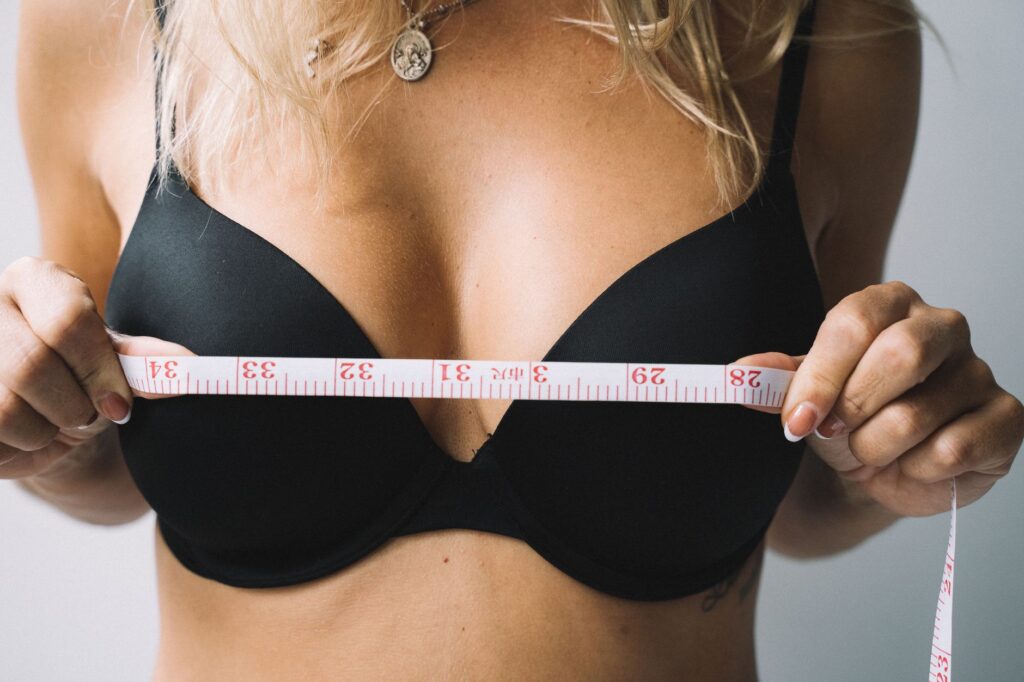
Use a measuring tape which is normally used for clothing measurement to measure the natural body size. You may need to find the
- Chest size
- Waist size
- Shoulder width
- Upper torso measurement
Stand Tall & Breathe Easy
Ask someone to help you measure in the correct manner for accurate observations. Stand naturally with
- Comfortably positioned feet
- Relaxed shoulders
- Head forward and upright
- Normal breathing
Tips To Measure Like A Pro
- Don’t pull tape extremely tight
- Make sure it doesn’t stay loose
- Take each measurement 2-3 times
- Record the observation and take average
- Measure over light clothing
Decoding The Sizing Chart
It’s time to take a glance at the sizing chart after you have your measurements. It is advisable not to use your general clothing size (S/M/L/XL). A posture corrector sizing guide may use completely different sizing standards. Check for the sizing chart provided by the manufacturer and compare the measurements.
A chart may list various sizes along with the body measurements
- Small
- Medium
- Large
- Extra Large
Match them with your detailed measurements to find the most compatible option.
Quick Checklist For Perfect Support, Comfort & Breathability
Once you put on a posture corrector, evaluate the following points mentioned in the table below:
|
Sr. No. |
Parameter |
Evaluate |
|
1. |
Support |
Does it gently help to keep the back and shoulders straight? |
|
2. |
Comfort |
Are you able to wear it without excess pressure or discomfort? |
|
3. |
Movement |
Can you move your arms and shoulders with ease? |
|
4. |
Breathing |
Are you able to breathe in a normal manner? |
|
5. |
Stability |
Does it stay in the intended position without frequent adjustments? |
|
6. |
Breathability |
Does material allow proper ventilation? |
|
7. |
Adjustability |
Are you able to make small changes to the posture corrector for fit-customization? |
If the answers to the above questions are yes, then BINGO! You‘ve likely got your right size and fit.
Red Flags One Should Avoid In A Posture Corrector
There can be certain signs which can be linked with poor sizing and fit of the posture corrector and they should not be ignored. Some of them include
- Sharp pain
- Numbness
- Skin irritation
- Difficulty breathing
- Digging straps
- Restricted movement
- Slippery and loose support
- Constant urge to remove
Daily Habits To Work On
A posture corrector can be very useful when combined with healthy daily habits to improve the posture. These include
- Doing regular exercise
- Not staying in same position for long periods
- Relaxing the shoulders and keeping them upright
- Starting with 15 to 30 minutes of posture corrector use daily
- Increasing the use of posture-support gradually for 1 to 2 hours
- Keep a regular check on your posture
Summary
A posture corrector can be a very useful wearable for everyday posture support and finding the right balance between support and flexibility is very important. To find the right fit which is neither too tight nor too loose is of utmost consideration for maximum comfort and functionality.
You can start by getting accurate body measurements, matching them with the sizing guide provided with the posture corrector and checking for adjustability to customize the fit to your body.
Evaluate the key parameters including support, comfort, movement, breathing, stability, breathability as well as adjustability. Pairing the correctly fitting posture corrector with healthy habits, avoiding the pain and discomfort everyday can literally help you build a good body posture.
FAQs
Ques. Should I choose the size of the posture corrector based on my general clothing size?
Ans. No. The posture corrector sizing guide may present a different standard of body measurements so it is advisable to clearly check the sizing guide and not choosing directly based on your general clothing size.
Ques. How tight should I use a posture corrector?
Ans. It should feel secure but not painfully tight. You should be able to breathe, move your arms, and move comfortably.
Ques. Should I wear the posture corrector with a loose fit?
Ans. No. A posture corrector with a loose fit may become uncomfortable with
- Straps slipping off the shoulders
- Little to no feeling of back support
- Constant adjustments
- Inability to stay consistently in intended position