
Texas has an official state soil. It’s called Houston Black, a dark, heavy clay from the Blackland Prairie that runs through the Dallas area. Farmers have prized soil like it for generations because it’s fertile and holds moisture well. Homeowners feel more mixed about it, and if you’re putting artificial grass on top of it, you need to know why.
Table Of Content
Clay changes how a turf job ought to be built. Techniques that work fine on Florida sand or Arizona decomposed granite can leave a North Dallas yard soggy and smelly. Fortunately the problems are predictable, and a well-built installation deals with all of them.
What makes clay difficult
Clay particles are extremely small. Soil scientists classify a particle as clay when it’s under two thousandths of a millimeter across, far finer than a grain of sand. Particles that small pack together tightly, so water moves through them very slowly. You can see it after a hard spring storm: puddles that last a day, sticky mud by the gate, and runoff headed for the street.
Clay also shrinks when it dries out and swells when it gets wet. That’s where the August cracks across Dallas lawns come from, and why foundation repair ads run all summer long. Whatever you put on top of clay has to live with that movement.
Artificial turf lets water pass through its backing, but after that the water needs somewhere to go. Lay turf straight onto compacted clay and the water just collects underneath. You get soft spots, an uneven surface, and in pet areas an odor that’s hard to shake. It’s the reason good Dallas artificial turf installers put so much of the job into work you’ll never see.
How a good install on clay goes
Crews all have their own habits, but a solid job on clay tends to follow roughly this order:
Pull up the existing grass and some soil. A sod cutter removes the turf and roots, and the crew digs out a few inches of clay to make space for the base.
Shape the grade. The subgrade gets sloped so water flows away from the house toward a place it can leave the yard, like a side yard, a drain or the street.
Fix the problem spots. A low corner that holds water might need a French drain, a catch basin or regrading before any rock goes down.
Decide about weed barrier. Some installers lay fabric and some don’t, so ask which they do and why.
Build the base. Crushed rock goes down in layers, each compacted with a plate compactor, with a finer layer on top for a smooth, firm surface.
Lay, seam and secure the turf. The crew cuts the rolls to fit, seams them together, and fastens down the edges.
Spread infill and brush it in, so the blades stand up and the surface has the right weight and feel.
Cheap jobs usually cut corners on steps two and five. A thin layer of sand over clay that was never shaped can look fine the day the crew leaves. One stormy spring will show you otherwise.
Timing matters too. Clay that’s soaked from a week of rain is hard to shape and compact well, so a careful crew may move your start date back a few days after a big storm. Concrete crews watch the forecast for the same reason. A delay like that usually means the installer cares how the yard will look years from now.
Questions for any contractor
You don’t need to become an expert, but a handful of questions will tell you plenty about who you’re dealing with.
Ask how deep they’ll dig and why. The answer should connect to your soil and to how the yard gets used.
Ask what base material they use. Crushed rock that drains and compacts well is standard, so find out what they’re bringing and how many passes with the compactor they plan to make.
Ask how water will get out of your yard. This matters most. A good installer can walk the property with you and show where water goes now and where it’ll go once the job is done.
Ask about your downspouts. Gutters that empty onto the turf area can overwhelm the drainage, and many installers extend or redirect them.
Ask about the sprinklers. Lawn zones usually get capped, but beds and trees still need water, so find out about converting zones to drip.
Your foundation and your trees
In Dallas, the yard and the house affect each other more than people remember. Take out a lawn that was getting regular irrigation, and the soil by your foundation may end up drier than before. Dry clay shrinks, and uneven moisture around the slab is one of the things foundation contractors warn people about.
Turf doesn’t hurt a foundation by default. You just have to plan for the change. Keep the grade carrying water away from the house, and if a foundation professional recommends it for your home, think about a soaker hose or drip line along the foundation.
The trees need a plan as well. Big shade trees that lived off the lawn sprinklers will need their own water once the lawn is gone. Put drip rings or soaker hoses at the root zone, and don’t cut through major roots during excavation. A good crew will work around them carefully.
The dirt changes from town to town
Soil around Dallas isn’t the same everywhere. Head west toward Grapevine, Southlake and Colleyville and conditions can shift from one neighborhood to the next, with sandier ground in some places and heavy clay in others. Lots near Grapevine Lake can come with their own slope and drainage quirks.
Local experience pays off for that reason. Before you book turf installation in Grapevine or anywhere else in the Metroplex, ask the crew what they usually find under yards in your area and how it changes their base plan. If a contractor tells you they do every yard the same way, they probably haven’t been digging very long. Readers a few hours up I-35 in Oklahoma City can ask the same questions, and Magnolia also installs artificial grass in Oklahoma City.
Check your own yard first
The next time it rains hard, go out about an hour after it stops. Walk around and note where water is still standing, where it’s running, and where it’s pouring off the roof. Take a few photos.
Then dig a small hole in a low spot, fill it with water, and time how long it takes to drain. That gives you a rough feel for how tight your clay is. Show the photos and notes to every installer you meet. Hire from the ones who look carefully, ask follow-up questions, and can tell you exactly how they’d get that water out.
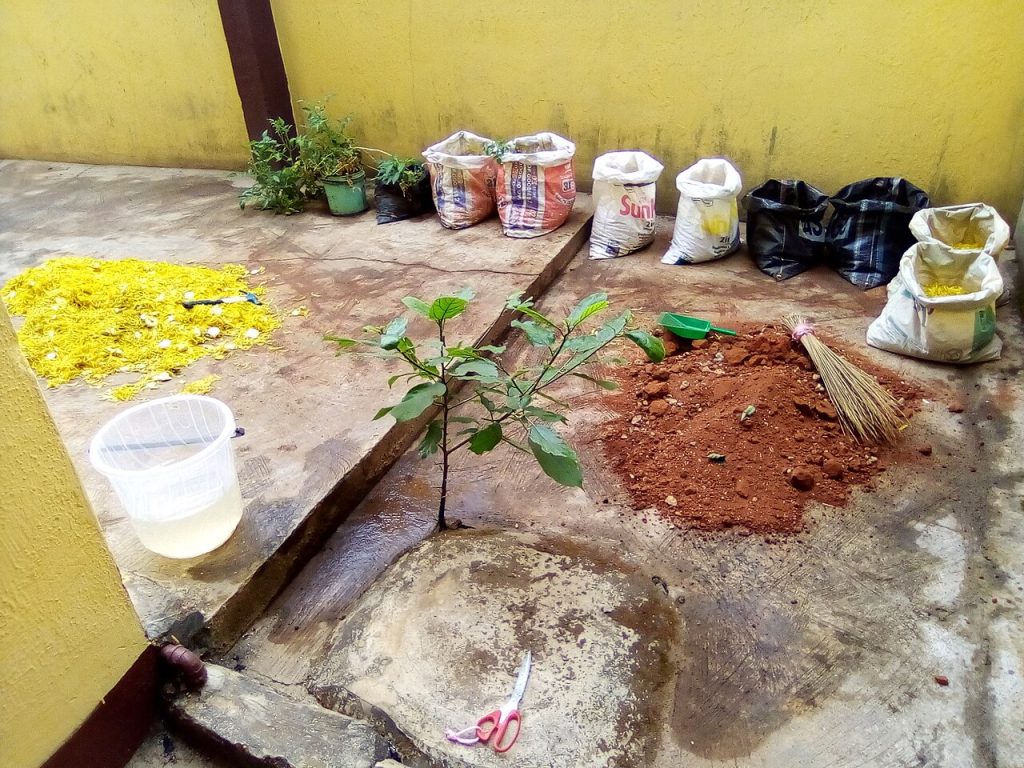
Image: Soil Preps, Wordsmith105, CC BY-SA 4.0, via Wikimedia Commons.