
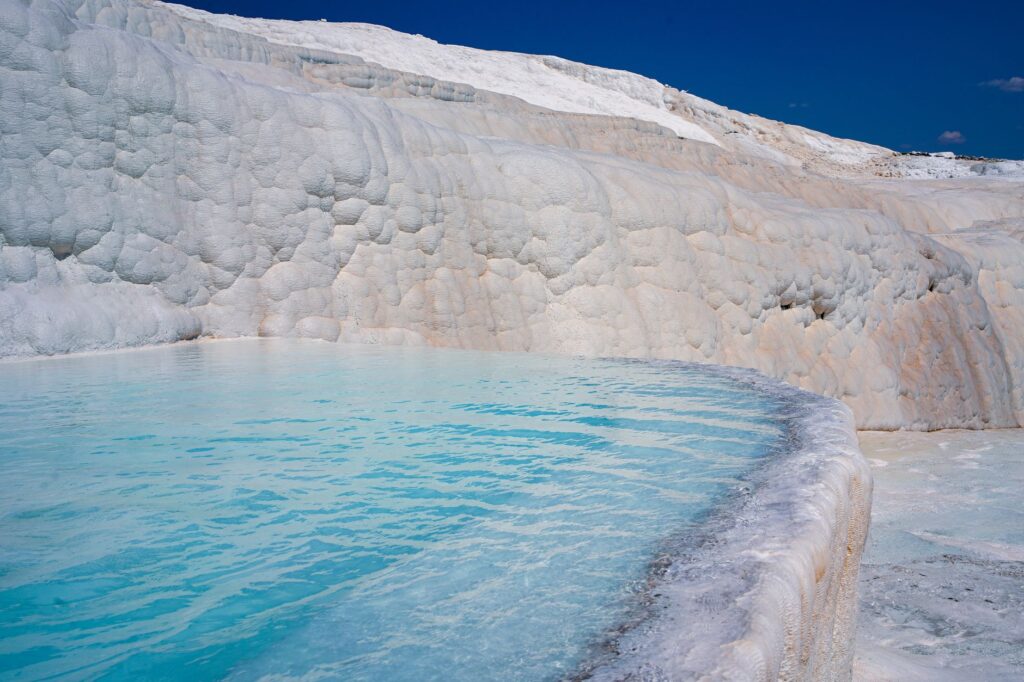

Several areas appear very peculiar to be real. Pamukkale in the southwest of Turkey is one of them. Pale blue water sits in shallow pools in a white terrace that descends the hillside. At a glance, the entire scene appears blanketed in snow.
Table Of Content
But there is no snow here. Mere hot rocks, white stone and landscape growing for millennia. It's a rather idyllic location, particularly in the off-season.
The Beauty of White Terraces
Pamukkale is Turkish for "Cotton Castle. Well the name does make sense when considering the moderately soft white formations. They are like frozen waterfalls with little pools atop each other. The terraces have been created when calcium content rich thermal water flew down the hill side leaving the mineral behind. Those deposits turned to the white travertine landscape over time.
there is something different about walking through Pamukkale as compared to visiting an ordinary natural attraction. Bare feet slide across the smooth white surface, while some parts have warm running water. Access to every pool is not allowed, however. Protection has been added to some sections to maintain the delicate formations. The water level fluctuates as well, and the terraces are not always equally blue all the year round.
Ancient History Above the Pools
It has another side though and Pamukkale. Hierapolis, a very ancient city, is located just above the terraces, and is closely related to the thermal springs of the area. The Romans expanded the city to become a significant spa centre. There remains a large theatre, ancient baths, temples and a great cemetery.
The theater itself is very impressive, rock walls for seats are all arranged, that view the surrounding scenery. There are parts of the city that have remained pretty much intact. Pamukkale and Hierapolis is a UNESCO World Heritage Site since 1988. The area is special combining its natural beauty with ancient history.
A Different Atmosphere Through the Day
Pamukkale by day, but in the light of the sun. Mornings are sometimes more mellow with less of a colour contrast across the terraces. In the late afternoon, white slopes are bathed in golden light. There is a lot of visitors and hot weather in the summer period. Generally, the exposed hillside is cooler in spring and fall seasons.
Something indelible about Pamukkale at sunset. The white formations look a bit warmer and the valley area a little hazy in the distance. The local town is quite small, and has hotels, restaurants, and shops. The nearby bigger city, Denizli, offers more transportation options.
Final Thought
The beauty of Pamukkale is hard to compare, it is really unique. The white terraces are the central feature, and the ancient ruins are an added bonus. Harmony of the landscape for warm mineral water, weathered stone and wide valley views. It's a rare place in Turkey, or maybe it's because it's so rare and unique and therefore so memorable.
FAQs
Where is Pamukkale located?
It is located in Denizli Province, southwestern Turkey.
Can visitors swim in the thermal pools?
Visitors can enter certain designated water areas, while many natural terraces are protected.
What is the best time to visit?
April to June and September to October generally offer pleasant temperatures for sightseeing.





1 thought on “Pamukkale and Its Beautiful White Terraces”