
Key Takeaways
-
Temperature changes, unusual sounds, rusty water, and moisture near the unit can indicate developing water heater trouble.
Table Of Content
- Key Takeaways
- Early Warning Signs of Water Heater Trouble
- Should You Repair or Replace the Unit?
- When Replacement Makes More Sense
- Comparing Common Water Heater Types
- Storage-Tank and Tankless Units
- Heat Pump and Point-of-Use Units
- How to Choose the Right Size
- Efficiency Ratings and Long-Term Costs
- Installation, Safety, and Local Code Concerns
- A Simple Maintenance Plan
- Monthly and Seasonal Checks
- Annual Service Tasks
- What to Do During a Leak or Sudden Failure
- A 2026 Water Heater Buying Checklist
- Common Water Heater Questions
- Is a tankless water heater always more efficient?
- How long does a water heater last?
- Can a home switch from gas to electric?
- What temperature setting is safe?
- Conclusion
-
Replaceable parts such as valves, thermostats, and heating elements can sometimes make repair worthwhile.
-
A leaking storage tank or repeated breakdowns often point toward replacement.
-
The right unit depends on peak demand, available fuel or electrical service, space, venting, drainage, and long-term operating costs.
-
Routine checks can reduce the chance of a surprise loss of hot water.
Chicago homeowners depend on reliable hot water through lake-effect cold snaps, busy mornings, and long winters that place extra demand on plumbing systems. When performance starts to change, finding a qualified water heater repair plumber near me can help determine whether a simple repair, preventive maintenance visit, or full replacement is the sensible next step.
Early Warning Signs of Water Heater Trouble
Water heater failures are not always sudden. A shorter hot shower, a new rumbling sound, or a small puddle may appear long before a complete outage. Check for moisture around the tank, pipe fittings, and drain valve. Also pay attention to rusty or cloudy hot water, repeated circuit breaker trips on electric units, a pilot light that will not remain lit, or temperature swings at the same fixture.
Should You Repair or Replace the Unit?
Age matters, but the type and location of the problem matter more. A sound tank with a failed thermostat, heating element, pressure-relief valve, connector, or ignition-related component may be repairable. A professional inspection can identify whether the issue is isolated or part of a larger decline in the system.
When Replacement Makes More Sense
Replacement is commonly the better path when the storage tank itself leaks, corrosion is visible on the tank body, repairs are becoming frequent, or the unit no longer supplies enough hot water for ordinary household use. Tank leaks cannot usually be repaired reliably because the tank lining has failed.
Comparing Common Water Heater Types
Every Chicago home has different constraints on space, utility, and demand. The following comparison can make the main options easier to evaluate before requesting estimates.
|
Type |
Best Known For |
Key Consideration |
|---|---|---|
|
Storage tank |
Familiar design and stored hot water |
Capacity and standby heat loss |
|
Tankless |
On-demand heating and compact size |
Flow rate during simultaneous use |
|
Heat pump |
High-efficiency electric operation |
Air space, drainage, and room temperature |
|
Point-of-use |
Serving a remote fixture |
Usually supplements whole-home heating |
Storage-Tank and Tankless Units
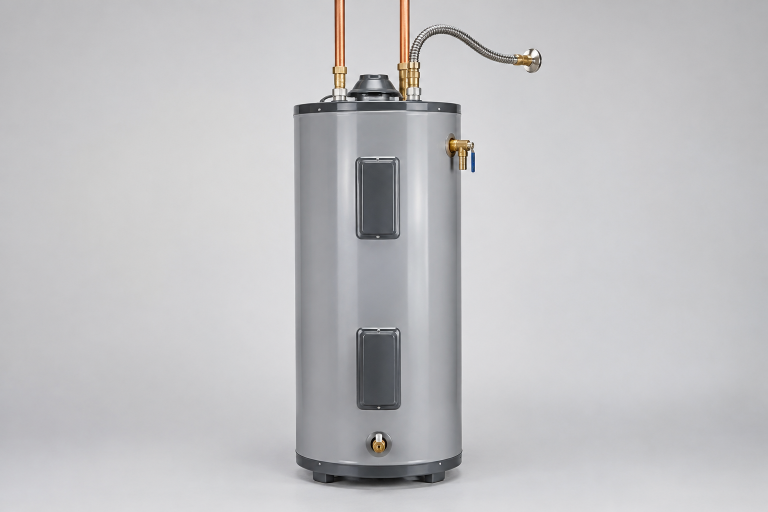
Storage-tank heaters hold a set amount of heated water for use when needed. Tankless units heat water as it flows through the appliance, which can save space but requires careful planning for incoming water temperature and the number of fixtures likely to run at once. In a large household, a tankless unit must be sized for peak flow, not just average daily use.
Heat Pump and Point-of-Use Units
Heat pump water heaters move heat from surrounding air into the tank. In an enclosed Chicago basement, installation conditions warrant close attention because the unit requires adequate ambient air, proper condensate drainage, and a suitable temperature range. ENERGY STAR provides guidance on buying heat pump water heaters to help homeowners assess capacity, available space, maintenance, and potential rebates. Point-of-use heaters can reduce wait time at a far-away sink, garage wash area, or addition.
How to Choose the Right Size
Start with the household’s busiest hour. Consider how many showers may run together, whether someone fills a large tub, and whether laundry or dishwashing often occurs during morning or evening demand. For tank models, compare tank capacity, first-hour rating, and recovery rate. For tankless models, compare gallons per minute at the expected incoming-water temperature. A two-person condo and a family with multiple bathrooms can require very different equipment.
Efficiency Ratings and Long-Term Costs
The lowest purchase price is not always the lowest-cost choice over the life of the equipment. Compare installation cost, fuel type, estimated energy use, warranty coverage, maintenance needs, and expected demand. The U.S. Department of Energy explains that water-heating efficiency standards use the Uniform Energy Factor to help distinguish how efficiently units convert energy into hot water. Ask for written estimates that separate equipment, labor, permits, disposal, and any needed electrical, venting, or plumbing changes.
Installation, Safety, and Local Code Concerns
Water heater installation can involve gas piping, electrical circuits, combustion air, venting, shutoff valves, expansion control, drainage, and clearances. Permit requirements vary by municipality, so Chicago-area homeowners should confirm local rules before changing fuel types or relocating equipment. Gas connections, electrical troubleshooting, pressure-relief piping, and flood-damaged equipment should be handled by qualified professionals.
A Simple Maintenance Plan
Monthly and Seasonal Checks
-
Look for leaks, corrosion, and new noises.
-
Keep the area around the unit accessible and free of stored items.
-
Watch for reduced hot-water volume or unstable temperatures.
Annual Service Tasks
Follow the manufacturer’s instructions for flushing sediment, inspecting the anode rod on compatible tank systems, and checking safety controls. Heat pump models may require air-filter cleaning. A service visit can also include a review of burners, venting, wiring, and connections before winter demand rises.
What to Do During a Leak or Sudden Failure
-
Keep people away from standing water near electrical equipment.
-
Shut off the water supply if it is safe to do so.
-
Turn off electrical power or fuel according to the equipment instructions.
-
Move valuables away from the affected area.
-
Arrange an inspection before restarting a flooded, leaking, or damaged unit.
Leave the area and seek prompt professional help if there is a gas odor, a major leak, visible electrical damage, or signs of overheating.
A 2026 Water Heater Buying Checklist
-
Record the current model, fuel type, capacity, and installation date.
-
Measure the installation space and access path.
-
List peak hot-water activities and future household changes.
-
Confirm gas, electrical, venting, and drainage requirements.
-
Review efficiency ratings, warranty terms, permits, and written scope of work.
Common Water Heater Questions
Is a tankless water heater always more efficient?
No. Efficiency depends on the model, fuel source, installation quality, maintenance, incoming water temperature, and the number of fixtures operating at one time.
How long does a water heater last?
Service life varies with water quality, usage, maintenance, installation conditions, and equipment type. Performance changes and tank condition are more useful warning signs than age alone.
Can a home switch from gas to electric?
Possibly, but the project may require electrical upgrades, changes to venting, drainage planning, and local approval. A site assessment should precede equipment selection.
What temperature setting is safe?
Follow the manufacturer’s instructions while considering comfort, scald prevention, and the needs of children, older adults, and other vulnerable household members.
Conclusion
The right water heater for a Chicago home balances demand, available utilities, installation conditions, budget, and safety. By watching for early warning signs, maintaining the system, and planning ahead for replacement, homeowners can avoid rushed decisions when hot water is needed most.