
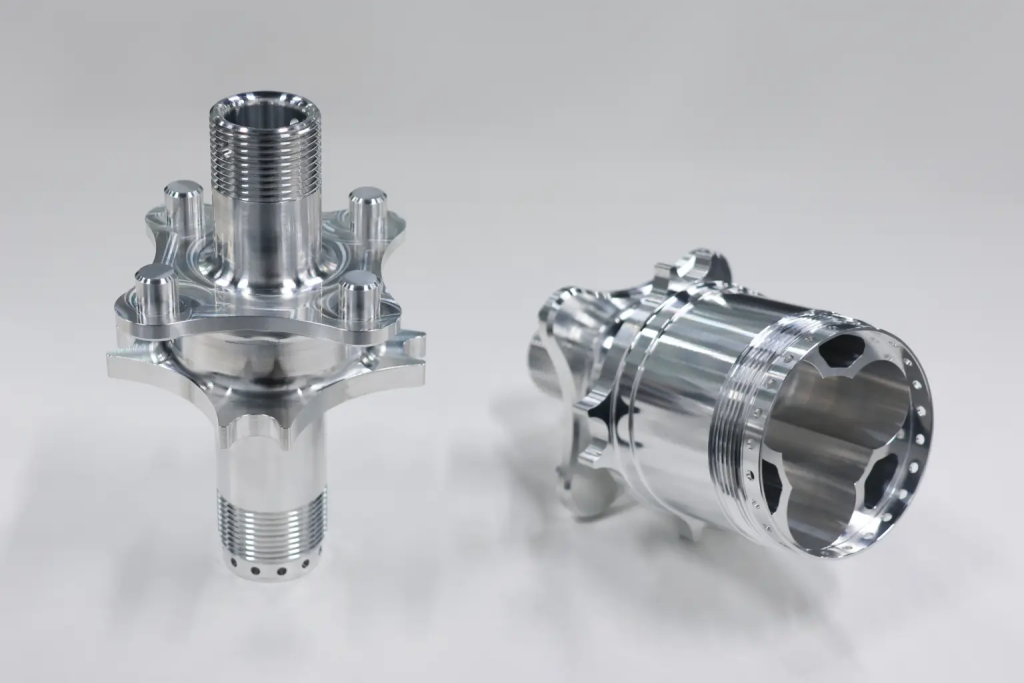

Small-batch production is an essential step between prototype development and large-scale production. It provides manufacturers the opportunity to test product designs, make small volumes, and get ready for market entry—before investing in high-cost mass production tooling. Rapid tooling can help with this by decreasing the time needed to develop a mold and making the production process more accessible. Knowing the tooling methods, materials, and manufacturing processes will help you decide which is best suited for various production needs.
Table Of Content
- 1. Understanding Rapid Tooling for Small-Batch Manufacturing
- 2. Exploring the Role of Rapid Tooling in Limited Production Runs
- 3. Selecting Between Aluminum and Soft-Steel Tooling
- 4. Comparing Manufacturing Processes for Small-Batch Production
- 5. Evaluating Design Requirements Before Tool Development
- 6. Understanding Material and Surface Finish Options
- 7. Managing Production Timelines and Quality Control
- Conclusion
1. Understanding Rapid Tooling for Small-Batch Manufacturing
Rapid Tooling is a term used to describe manufacturing techniques that reduce the time required to develop molds, dies, and other production tools. Rapid Tooling offers a streamlined process and a range of appropriate materials that can help make tool development more rapid than conventional tooling processes, which could require extensive machining and longer preparation. These techniques assist manufacturers in transitioning from proven designs to actual parts with less delay.
Tooling requirements are different for small batch production compared with high volume manufacturing. A mold for a few hundred parts doesn’t need to be as hard, last as long, or cost as much as a mold that is meant for millions of cycles. Rapid tooling takes care of this distinction, focusing on tool building that can be done quickly, at a lower cost, and with shorter tool development time.
2. Exploring the Role of Rapid Tooling in Limited Production Runs
For small production runs, there needs to be a compromise between production efficiency and tooling costs. Expensive hardened-steel molds can be an added financial burden if the production volume is relatively small. An alternative is rapid tooling in aluminium or soft-steel tooling, which allows for limited production with appropriate dimensional consistency.
Rapid Tooling with Aluminum and Soft Steel is provided by manufacturers like 3ERP for batch sizes of more than 100 parts. This will help to fill the gap between initial prototyping and full production. It also enables product teams to test component functionality, assembly compatibility, and market demand prior to major investment in tooling.
3. Selecting Between Aluminum and Soft-Steel Tooling
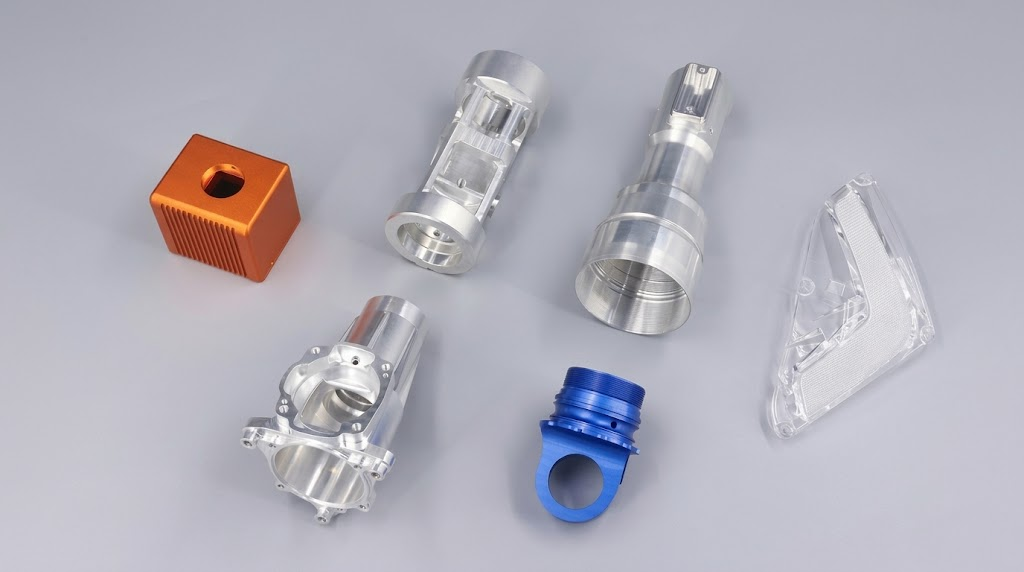
The type of materials used directly affects tooling costs, machining, durability, and production quantities. Aluminium tooling typically can be easier to machine than steel; therefore, it can be useful if shorter manufacturing times and lower tooling costs are important. It also has a thermal conductivity that can help to achieve efficient heat transfer in injection molding, depending on the molding conditions and design of the mold.
Soft-steel tooling is more durable than many of the aluminum tooling alternatives and is able to meet greater production demands. It can also offer improved wear resistance for multiple molding cycles. But its machining requirements and manufacturing costs may be higher.
The selection of the right choice is dependent on the quantity to be produced, the characteristics of the resin, the geometry of the component, dimension tolerances, and the number of tools required. An early evaluation of these factors avoids unnecessary investment in tooling, which might be more than is needed for production.
4. Comparing Manufacturing Processes for Small-Batch Production
Rapid Tooling is especially helpful when injection molding is needed, but a variety of other manufacturing processes can be used in conjunction with rapid tooling for limited production. Each has its own geometries, materials, and functional requirements.
- Injection Molding: Ideal for creating plastic parts with repeatable molds. Limited production runs are more cost-effective for rapid aluminium or soft-steel tooling.
- CNC Machining: Milling and turning to produce metal or plastic components straight from CAD files and without the need for special mold construction.
- Vacuum Casting: Creates small quantities of plastic-like parts in different finishes using silicone molds and polyurethane materials.
- 3D Printing: Fabricates components directly from digital models, enables complex geometries, and allows early functional evaluation.
- Sheet Metal Fabrication: Laser cutting, bending, punching, stamping, and welding are combined to produce enclosures, brackets, and structural parts.
The choice of process will depend on the requirements of the material, the complexity of the component, the quantity of components that need to be produced, and the acceptable manufacturing costs.
5. Evaluating Design Requirements Before Tool Development
Design preparation is a key factor in the success of rapid tooling in providing consistent components. A mold should fit the geometry and behavior of the material, and the conditions of part manufacturing. Wall thickness, draft angles, ribs, bosses, and internal corners all have an impact on mold complexity and part quality.
Design for Manufacturability (DFM) analysis can be used to flag any potential manufacturing challenges before tooling is started. Engineers can look at sections of a wall to determine if they need to be adjusted, if draft angles are adequate for smooth ejection, and if the location of the gates is suitable for the appropriate flow of material.
Shrinkage, cooling behavior, parting lines, and ejection mechanisms also must be taken into account. These details can be discussed during design review to minimize mold changes, manufacturing downtime, and dimensional variations from batch to batch.
6. Understanding Material and Surface Finish Options
When producing a small batch or parts for use in a variety of applications, the material required may vary. The choice of material will influence mechanical properties, flexibility, temperature resistance, machinability, and appearance.
A wide range of metals and plastics can be used, enabling manufacturing projects to support a variety of functional requirements. The materials they can choose from are aluminium, steel, stainless steel, engineering plastics and other appropriate materials. The surface treatment also affects its anti-corrosion properties, wear resistance and appearance.
Over 50 surface finishes are available to meet the needs of various components. Various finishes, such as anodizing, powder coating, polishing, painting, and more, are available depending on the material and manufacturing technique. Choosing the right combinations of materials and finishes can ensure uniformity in appearance and performance for short production runs.
7. Managing Production Timelines and Quality Control
Rapid Tooling involves coordinating design review, tool making, sample testing, and final production. With clear CAD files and accurate technical specifications, engineers can evaluate the manufacturing feasibility and provide suitable quotations. Typically, they will support STEP, STP, IGES, SLDPRT, and other standard CAD file formats.
A streamlined manufacturing workflow generally involves:
- CAD Submission: Upload the component design with relevant dimensions and material requirements.
- Design Analysis: Review manufacturability, tooling requirements, and potential design adjustments.
- Quotation and Confirmation: Evaluate pricing, production quantities, finishing requirements, and estimated delivery schedules.
- Tooling and Manufacturing: Produce the required mold and manufacture the specified components.
- Inspection and Shipping: Verify dimensions and quality before packaging and dispatch.
Quality management remains essential throughout these stages. ISO 9001:2015-certified manufacturing systems, appropriate measuring equipment, and inspection procedures help verify that manufactured parts meet specified requirements. Simple eligible components may also qualify for standard lead times starting at three business days, depending on project complexity and production conditions.
Conclusion
Rapid Tooling offers a viable production path for companies looking to manufacture products, but the quantity of production is limited. Using appropriate mold materials, design analysis, and manufacturing processes, companies can control the initial investment in tooling and ensure consistency of components. Each tooling material, aluminum and soft steel, has its own set of advantages based on production quantities, material needs, and tool life.
When working with an experienced manufacturing partner like 3ERP, it can be easier to go from prototype to small-batch production. It has the ability to perform various manufacturing processes such as injection molding, CNC machining, vacuum casting, etc. Since 2010, the company has completed over 30,000 projects and is ISO 9001:2015 certified to offer manufacturing resources for prototypes, limited production runs, and production scaling. The use of tooling should be based on the actual needs, which helps to create a more efficient and controlled manufacturing process.