
If you live in Ruskin, you already know water behaves differently here than it does in drier places. Flat lots, sudden downpours, and heavy soils can turn a small drainage issue into a soggy lawn, a cracked walkway, or moisture creeping toward your foundation. Before you spend money on random fixes, it helps to understand how drainage decisions actually work on a real property and what separates a short-term patch from a system that keeps performing.
Table Of Content
- Why drainage problems show up so often in Ruskin yards
- What a French drain actually does on a residential property
- Signs your yard needs more than a quick DIY fix
- How proper installation changes the result
- Why soil type and grading matter more than most homeowners expect
- Common mistakes that make drainage systems fail early
- How to evaluate a drainage contractor without guessing
- What good drainage means for your home over time
Why drainage problems show up so often in Ruskin yards
Ruskin sits in a part of Hillsborough County where intense rain events are common, and many properties deal with low-lying terrain. That combination creates runoff patterns that are easy to underestimate. You might notice puddles after a storm, but the bigger issue is often what happens after the visible water disappears.
Saturated soil can stay heavy for days, stressing turf roots and making foot traffic chew up the lawn fast. If your lot has poor grading, water may drift toward the house instead of away from it. In neighborhoods with dense development, one property’s drainage can also affect the next. A yard that looks fine in winter can become a problem site in summer storm season.
What a French drain actually does on a residential property
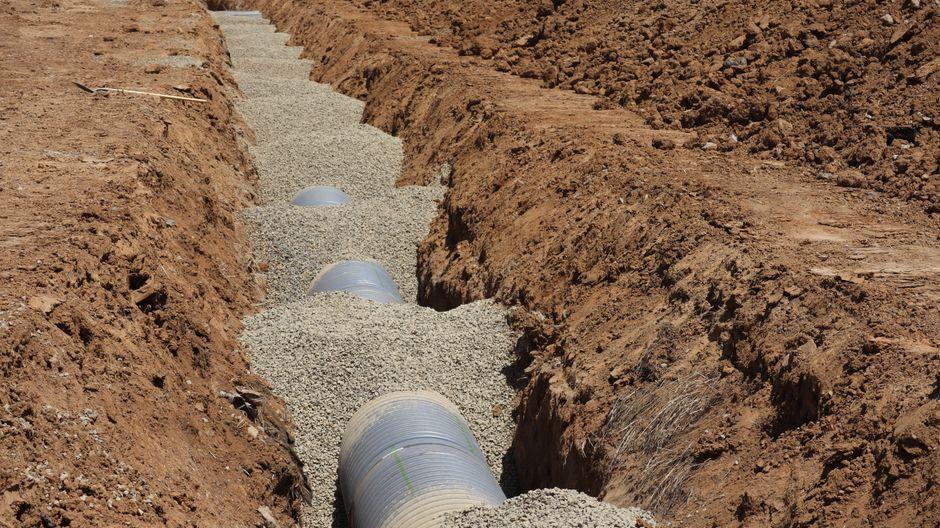
A French drain is not just a trench with gravel tossed into it. A properly built system usually includes a trench, perforated pipe, filter fabric, and drainage stone arranged to intercept and redirect subsurface or surface water. The goal is controlled water movement, not simply hiding wet soil under rocks.
When water collects in one section of your yard, a French drain can relieve hydrostatic pressure and move that water toward a safer discharge point. That matters near foundations, patios, fences, and planting beds. On a practical level, it can also reduce mosquito-friendly standing water and stop repeated washouts after every storm. The design depends on slope, soil composition, and outlet planning, not just trench depth.
Signs your yard needs more than a quick DIY fix
Some drainage issues look simple at first. You see mud, buy a few bags of gravel, and hope the problem disappears. Then the same area floods again two weeks later. That usually means the actual water path was never corrected.
Watch for clues such as water pooling near downspouts, mulch floating out of beds, mildew on lower exterior walls, or grass that dies in one recurring patch. Soft spots that stay wet long after rain are another warning sign. If your driveway edge is eroding or pavers keep shifting, runoff may be undermining the base layer. These are site-performance issues, not cosmetic annoyances. A lasting fix starts with diagnosing where water enters, where it stalls, and where it can realistically exit.
How proper installation changes the result
The difference between a system that works for years and one that clogs early often comes down to installation details. Trench slope has to be consistent. Pipe selection matters. Filter fabric needs to prevent sediment intrusion without choking flow. Discharge points need to be legal, practical, and placed where water will not cycle back.
If you are evaluating French drain installation in Ruskin, pay attention to whether the work includes site assessment, grading review, and a realistic drainage plan for local storm conditions. Ruskin properties can have challenging drainage profiles because a fix that works on a sloped lot elsewhere may fail on a flatter parcel here. Good installation treats the system as part of the whole landscape, not as an isolated trench.
Why soil type and grading matter more than most homeowners expect
A lot of people focus on the visible water and miss the ground conditions underneath. In many Florida properties, the soil can compact tightly, slowing infiltration and forcing water to linger near the surface. If the grade is subtle, even a small depression can collect surprising amounts of runoff.
That is why drainage planning should start with topography and soil behavior. A contractor may use a laser level or other layout tools to identify pitch changes you cannot easily see. Sometimes the yard needs swales, catch basins, downspout extensions, or regrading along with a French drain. If the system is installed without accounting for roof runoff or neighboring elevations, you may end up moving water from one problem area to another. Drainage is one of those trades where precision saves money.
Common mistakes that make drainage systems fail early
A failed drainage system usually does not fail for mysterious reasons. The problems are often predictable. One common mistake is using the wrong aggregate or skipping filter fabric, which allows sediment to invade the stone bed and perforated pipe. Another is installing the trench with an inconsistent slope, creating stagnant sections.
Homeowners also get into trouble when they send too much roof water into a system that was sized only for yard seepage. Tree roots can become an issue if the route is planned too close to aggressive root zones. In some cases, the discharge point is placed where local runoff simply pushes water back. If your lawn has repeated wet zones despite previous work, it may be time to audit the original layout instead of adding another patch.
How to evaluate a drainage contractor without guessing
Drainage work is easy to oversell because the components look simple from the surface. What you need is a contractor who can explain water movement on your property in plain terms. Ask how they identify source water, how they determine slope, what pipe and fabric they use, and where the system will discharge.
You should also ask what happens in a heavy summer storm, not just a normal rain. A useful proposal will connect the drain design to your actual site conditions: foundation proximity, lot pitch, existing hardscapes, and runoff volume. Photos of similar completed projects help, but the real value is in the diagnostic process. If someone jumps straight to trenching without discussing grading or outlet strategy, that is a sign to slow down.
What good drainage means for your home over time
Reliable drainage affects more than comfort after a storm. It can help preserve soil stability around the house, reduce wear on landscaping, and limit the moisture conditions that create long-term maintenance headaches. Even things like fence longevity and paver performance can improve when water stops sitting where it should not.
If you plan to stay in your home, drainage is a durability investment. If you may sell later, it also supports curb appeal in a very practical way. Buyers notice swampy corners, recurring puddles, and mildew stains quickly. A yard that drains properly feels maintained because it is maintained at the systems level. In a place like Ruskin, where weather can expose weak drainage fast, smart planning gives your property a better chance to handle the next storm without surprise damage.