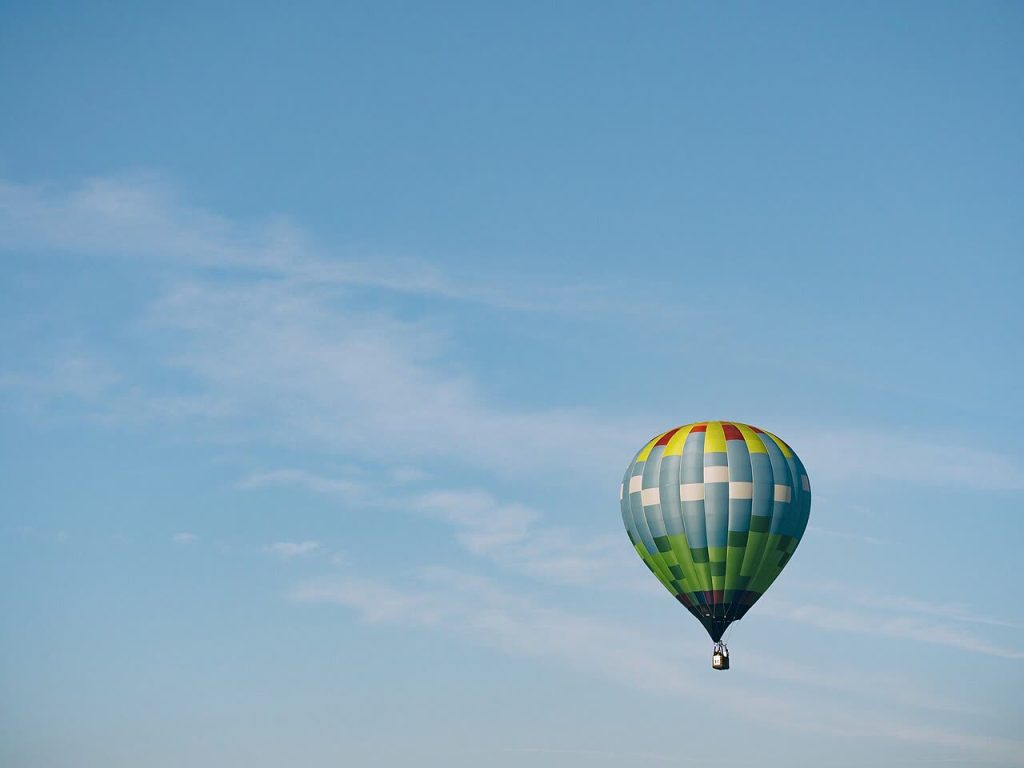

Hot air balloons look like magic. They are not magic. They are physics, and fairly simple physics at that. Hot air rises because it weighs less than the cold air sitting right next to it, and that single fact is really the whole trick behind flight. A hot air balloon works by trapping a huge bubble of heated air inside a fabric envelope, which makes the entire balloon lighter than the air around it. This article covers how that heat creates lift, how pilots steer using only wind, and why timing a flight always comes down to weather.
Table Of Content
Why Hot Air Rises in the First Place
Heat makes air molecules spread further apart. Spread apart air weighs less per cubic metre than air that's packed tightly together. That lighter air floats upward through the heavier cold air around it, the same way oil sits on top of water instead of mixing in.
Cold Air vs Heated Air, Side by Side
| Property | Cold air outside | Heated air inside the envelope |
|---|---|---|
| Typical temperature | 15 to 20°C | Around 100°C |
| Density | Higher | Lower |
| Weight per cubic metre | Heavier | Roughly a quarter lighter |
| What it does | Sinks | Rises |
The Parts Actually Doing the Work
- Envelope: the giant fabric shape that holds all the heated air
- Burner: the propane flame that reheats air throughout the flight
- Basket: carries the pilot and every passenger
- Parachute vent: a flap up top the pilot pulls to let hot air out and start descending
- Skirt: the fireproof section near the burner, stops the fabric from scorching
How Pilots Steer Without a Steering Wheel
There isn't one. A balloon has no engine pushing it sideways, so a pilot steers purely by changing height. Wind often blows in different directions at different altitudes, sometimes a completely different direction just 500 feet higher or lower. Climb or sink into the right layer, and the balloon turns, slowly, without anyone touching anything horizontal.
Why Wind and Weather Decide Everything
This is why flights almost always happen early morning or early evening. Thermal activity, the rising bubbles of warm air off the ground that make the ride bumpy, hasn't kicked in yet at those hours, and wind is at its calmest. Most operators won't fly once wind crosses roughly 10 to 15 knots. A flight scheduled for midday simply wouldn't happen, not because of rules, but because the air itself gets too rough to fly in safely.
The lack of control is the part people forget about going in. You are not driving this thing anywhere specific. You are drifting, reading the sky instead of a map, and somehow that is the whole appeal.