Injera is a large, sour, fermented flatbread from Ethiopia and Eritrea, with a soft, spongy texture and a surface full of small holes. It is usually made from teff flour, and at the table it does three jobs: it is the plate the stews sit on, the utensil you eat them with, and part of the meal itself. You tear off a piece with your right hand, wrap it round some stew and eat both together.
Table Of Content
What injera is made from
Injera is traditionally made from teff, a tiny grain native to Ethiopia and Eritrea. Wikipedia’s injera article says cooks also use barley, millet, sorghum, wheat, maize or rice, depending on what is available and what it costs, so the injera you meet outside Ethiopia is often a mix.
About teff
Teff (Eragrostis tef) is a kind of lovegrass that has been grown in the Ethiopian Highlands for thousands of years. Its seeds are smaller than 1 mm across, and they range in colour from white to a deep reddish brown, according to Wikipedia’s teff article. The same article says Ethiopia produced more than 90% of the world’s teff in 2016.
How the batter ferments
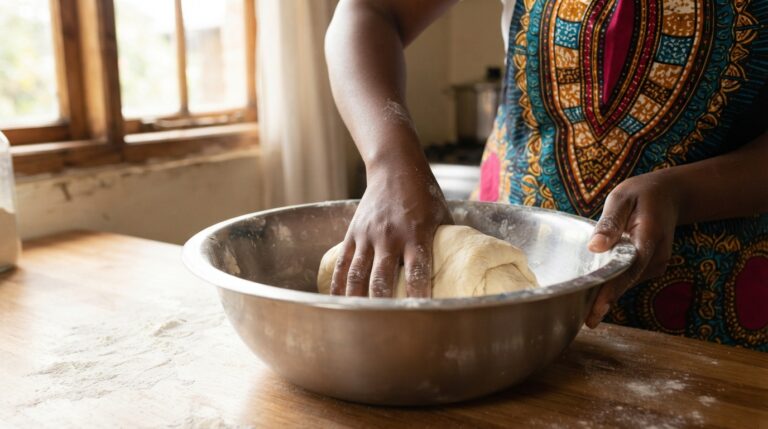
Injera gets its sour taste from fermentation that lasts one to three days. The batter of flour and water is started with ersho, a liquid saved from a previous batch that carries the microbes needed to ferment it, as Wikipedia explains.
There are two stages:
- First fermentation: 24 to 72 hours after the ersho is added.
- Second fermentation: 30 to 120 minutes after the cook adds absit, a portion of batter that has been cooked to thicken it.
How injera is cooked
Injera is cooked on a wide clay griddle called a mitad, heated to about 90 to 95°C. Per Wikipedia, the cook pours the batter onto the mitad in a spiral, covers it with a lid, and cooks it for about two to four minutes. As steam escapes, small holes called “eyes” open across the top. The finished bread is large: Wikipedia’s Ethiopian cuisine article puts it at about 50 centimetres across.
The holes and spongy texture let the bread soak up the juices of the stews placed on it, which is a large part of its appeal.
How injera is eaten
At a traditional meal, one large injera covers a shared tray and the stews are spooned on top. Each person tears off pieces of injera and uses them to pick up the food. Wikipedia notes that Ethiopians usually eat with their right hand.
Table manners for first-timers
Responsible Travel’s Ethiopia food guide describes two customs a visitor is most likely to meet:
- Wash your hands before the meal. It is polite to do this where the people you are eating with can see.
- Eat and pass food with your right hand.
Beyond that, ordinary good manners at any shared table apply. Eat from the part of the tray in front of you rather than reaching across, and when in doubt, follow what your hosts do.
Gursha: feeding someone else
Gursha is the custom of placing a mouthful of food, wrapped in injera, directly into another person’s mouth. Responsible Travel describes it as a sign of care and affection, seen especially among older people and couples. If someone offers you gursha, it is a friendly gesture.
Dishes served on injera
Almost any Ethiopian stew or side can go on injera. These are the names you are most likely to see on a menu:
| Dish | What it is |
|---|---|
| Wat | The general word for a stew, often made with goat or beef |
| Doro wat | Chicken stew with eggs, described by Wikipedia as the national dish; Responsible Travel says it is cooked for occasions such as Easter and New Year |
| Tibs | Sautéed meat |
| Kitfo | Minced raw beef with spices, which Responsible Travel compares to steak tartare |
| Gored gored | Raw beef chunks served with lemon and injera |
| Firfir | Shredded injera mixed with stew |
| Beyaynetu | A vegan platter of 10 to 15 small dishes |
Sources: Wikipedia’s Ethiopian cuisine article and Responsible Travel.
Two flavourings run through many of these dishes. Berbere is a mix of powdered chilli and other spices, and niter kibbeh is a spiced clarified butter, per Wikipedia.
Fasting days and vegan meals on injera
Ethiopia has a large range of vegan dishes because of religious fasting. The Ethiopian Orthodox Church observes fasts that include all Wednesdays and Fridays and the whole of Lent, during which followers avoid animal products, according to Wikipedia. Responsible Travel puts the total at more than 180 days a year.
For visitors, this means beyaynetu and other plant-based dishes are easy to find, especially on Wednesdays and Fridays. If you do not eat meat, it is one of the easier cuisines to order from.
After the meal: coffee
A traditional Ethiopian meal often ends with coffee. Wikipedia’s Ethiopian cuisine article describes a ceremony held after meals in which the beans are roasted, ground and served on the spot, and notes that Ethiopia is thought to be where coffee first came from. Because the beans are roasted and ground in front of you, the ceremony is unhurried, so leave time for it if you are invited to stay.
Ordering injera for the first time
A few practical points help at an Ethiopian or Eritrean restaurant anywhere in the world:
- Order one or two stews plus beyaynetu to share, so you taste several dishes at once.
- Expect extra injera on the side. It is part of the meal, not a garnish.
- Ask how hot a dish is if you are unsure. Berbere can be strong.
- Ask what flour the injera is made from if you want pure teff, since many kitchens mix in other grains.