On a first visit to Lagos, start with five street foods: suya (spiced grilled meat), akara (bean fritters), puff-puff (sweet fried dough), boli (roasted plantain) and ewa agoyin (mashed beans with pepper sauce). Between them they cover breakfast, an afternoon snack and a late-night bite. A few more, such as abacha and roasted corn, are worth trying once you know your way around.
Table Of Content
When to eat what
Lagos street food follows the clock, so timing is half the job. The food guide Eat.Drink.Lagos says akara and koko (a porridge) are morning foods, roasted corn and boli show up in the afternoon, and suya is sold at night.
| Time of day | What to look for |
|---|---|
| Morning | Akara, often with bread or pap (corn porridge) |
| Afternoon | Boli, roasted corn |
| Evening and night | Suya; OkayAfrica suggests 9 to 11 pm as the best time |
| Any time | Puff-puff, ewa agoyin |
Suya
Suya is thinly sliced beef, chicken, lamb or goat, coated in a spice mix and grilled on skewers over a fire. It comes from the Hausa people of northern Nigeria, according to Wikipedia’s suya article, and is sold across the country.
The flavour comes from yaji, a spice blend that Wikipedia lists as dried hot chilli and cayenne, ginger, dried onion, salt and kuli-kuli, a ground peanut cake. There is no single recipe, so every grill tastes a little different. The meat is sliced off the skewer and served with raw onion, tomato and extra yaji on the side. The sellers, traditionally men, are called mai suya.
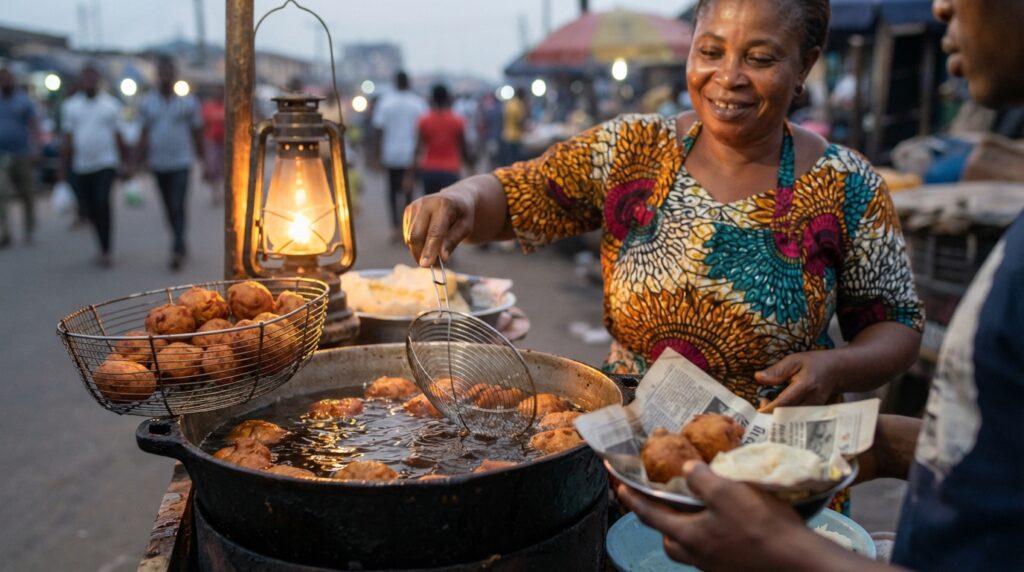
Eat.Drink.Lagos says suya is at its best after sunset, wrapped in newspaper. Remitly’s Lagos food guide points to Obalende and Victoria Island as good areas to look.
If you have a peanut allergy, ask before you eat suya, since peanut is part of the spice mix itself.
Akara
Akara are small deep-fried bean fritters, crisp outside and soft inside. Wikipedia describes how black-eyed peas or other cowpeas are ground with pepper and onion, beaten to add air, then fried in small balls. The dish comes from Yorubaland, which covers parts of Nigeria, Benin and Togo.
In Nigeria akara is mainly a breakfast food, eaten with bread, custard or corn porridge. OkayAfrica adds that people also eat it late at night. Eat.Drink.Lagos treats “akara and bread” as a breakfast combination in its own right. A relative of akara travelled to Brazil, where it is called acarajé.
Puff-puff
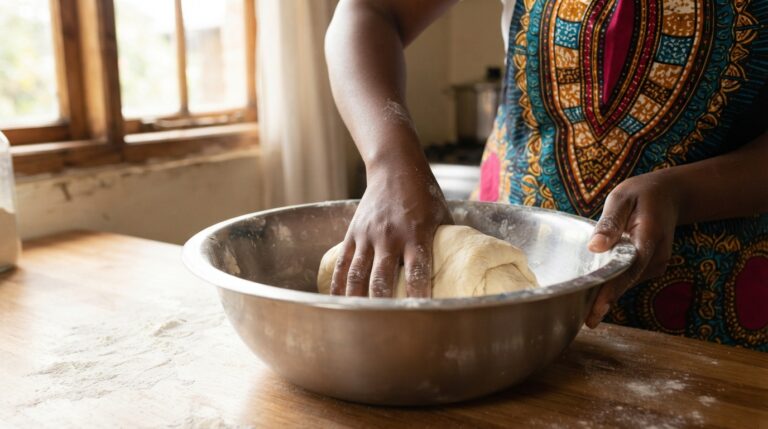
Puff-puff is a ball of sweet dough made with flour, yeast and sugar, deep-fried until golden. Wikipedia says it is eaten across West Africa under many names: bofrot in Ghana, for example, and beignet in Senegal and Cameroon.
You will find puff-puff from street hawkers and at parties, where it is part of the “small chops” platter of finger foods, according to Eat.Drink.Lagos. Remitly mentions Balogun Market and Lagos Island as places to find it. If you are wary of chilli, it is a gentle place to start: the usual recipe is sweet fried dough with no pepper in it.
Boli
Boli (also spelled bole) is whole plantain roasted over a grill. OkayAfrica describes it served with a palm oil sauce of sliced peppers and tomatoes and roasted fish, sometimes with roasted groundnuts.
Eat.Drink.Lagos notes that Lagos sellers often keep it simpler, with groundnuts and palm oil. Look for it in the afternoon, when Eat.Drink.Lagos says it appears. Remitly names Ojuelegba and Ikorodu as areas to try.
Ewa agoyin
Ewa agoyin is soft mashed beans topped with a rich, caramelised pepper sauce. According to Remitly, the sauce is made with dried peppers, onions and palm oil, and the dish is easy to find in Yaba and around the CMS bus stop.
It is often eaten with bread. Eat.Drink.Lagos says it pairs with anything from bread to spaghetti, but warns that some versions use too much oil, so look at a plate before you order one.
A few more to try
Once the five above are done, these are worth adding, all described by OkayAfrica:
- Abacha: dried, shredded cassava served with fried fish and a palm oil sauce, eaten in the afternoon or evening.
- Roasted or boiled corn: sold in harvest season (August to November) with ube, a local pear, or coconut.
- Moi moi: black-eyed bean paste steamed in leaves or foil, eaten as a snack or a side.
- Kuli-kuli: a crunchy snack made from dried peanuts with a little spice, often sold in small plastic bags and especially popular in northern Nigeria.
How to buy street food in Lagos
The best street food in Lagos is often found by asking. Eat.Drink.Lagos suggests asking people who live or work in an area where the good vendors are. It also notes that the plainer the “Mama Put” (a small roadside food stall), the more likely the food is to be good.
A few plain common-sense habits help on any first trip:
- Pick stalls with a steady stream of local customers.
- Choose food that is cooked or reheated in front of you and served hot.
- Drink sealed bottled water and carry hand sanitiser or wipes.
- Start with small portions until you know how much pepper you can handle.
- Ask about ingredients if you have any allergy. Suya spice contains peanut, and many sauces use palm oil.
Expect some misses. Eat.Drink.Lagos is honest that even recommended spots sometimes disappoint, so try more than one vendor before you decide what you think of a dish.
Sources
- Suya (Wikipedia)
- Akara (Wikipedia)
- Puff-puff (Wikipedia)
- Here’s Your Ultimate Guide To Nigerian Street Food (OkayAfrica)
- The Eat.Drink.Lagos Guide to Buying (and Enjoying) Street Food
- A Definitive Ranking Of Street Food In Lagos (Eat.Drink.Lagos)
- The Best of Lagos Street Food and Where to Find It (Remitly)