
Digital technology has changed how orthodontic treatments are planned, allowing dental professionals to study tooth positions and simulate potential movements before treatment begins. However, the effectiveness of removable orthodontic appliances depends on more than the accuracy of a digital model. Biological response, clinical assessment and ongoing monitoring all influence treatment progression.
Table Of Content
- How does digital technology help plan orthodontic treatment with clear aligners?
- How does an intraoral scanner create a digital impression of the teeth?
- Can patients see how their teeth might look before treatment begins?
- How are personalised clear aligners designed and manufactured?
- Why do some clear aligner treatments require attachments?
- Why might teeth not move exactly as predicted by the digital plan?
- How can digital planning support more complex orthodontic cases?
- How are treatment results monitored with clear aligners in Kirkby Lonsdale in Cumbria?
- Digital planning for clear aligners in Kirkby Lonsdale in Cumbria: combining technology with clinical assessment
For patients considering clear aligners in Kirkby Lonsdale in Cumbria, Lonsdale Dental Practice combines intraoral scanning, digital treatment planning and in-house aligner production. Understanding how these technologies contribute to orthodontic care helps explain the relationship between the initial simulation, the movement of individual teeth and the final clinical outcome.
How does digital technology help plan orthodontic treatment with clear aligners?
Orthodontic treatment begins with a detailed assessment of the position of the teeth, the relationship between the upper and lower dental arches and the condition of the supporting tissues. Digital technology allows dental professionals to collect and organise information that can support this evaluation. Unlike an approach based exclusively on visual examination, digital orthodontic planning provides additional opportunities to analyse dental relationships and investigate potential treatment strategies.
The information collected is used to develop a sequence of planned tooth movements. Each aligner is designed to encourage specific changes, gradually moving the teeth towards the intended positions. However, digital planning does not replace clinical judgement, as the feasibility of these movements depends on factors such as root anatomy, bone support, gum health and the individual patient’s biological response.
How does an intraoral scanner create a digital impression of the teeth?
An intraoral scanner is a handheld device that captures images of the teeth and surrounding oral structures. These images are combined by dedicated software to generate a three-dimensional representation of the dental arches. The resulting digital impression can be examined from different angles, allowing the dental professional to assess tooth positions, available space and certain aspects of the bite.
At Lonsdale Dental Practice, intraoral scanning is used to support orthodontic assessment and the preparation of personalised aligners. Digital impressions can reduce the need for conventional impression materials, which some patients find uncomfortable. They also provide a record of the initial dental situation that can be compared with subsequent scans to evaluate changes during treatment, although additional diagnostic examinations may still be required.
Can patients see how their teeth might look before treatment begins?
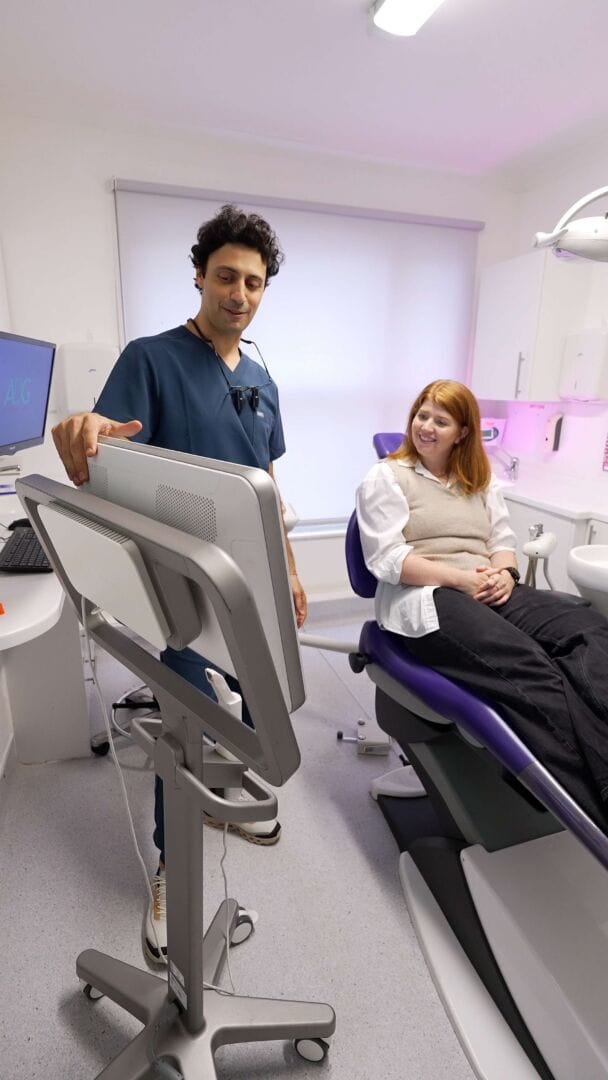
One of the distinctive features of digitally planned orthodontics is the possibility of visualising proposed changes before the first appliance is fitted. Using a three-dimensional model, dental professionals can illustrate how individual teeth may move throughout the different stages of treatment. This digital treatment simulation can help patients understand the proposed objectives and the sequence of movements required to achieve them.
Nevertheless, a simulation represents a planned outcome rather than a guaranteed prediction. Teeth do not always respond precisely as anticipated by the software, and certain movements are more difficult to achieve than others. Differences between the simulated and actual positions may require changes to the treatment plan, highlighting the importance of professional supervision throughout the orthodontic process.
How are personalised clear aligners designed and manufactured?
Once the initial treatment plan has been established, the proposed tooth movements are divided into progressive stages. Each stage corresponds to a slightly different appliance shape, designed to apply controlled forces to selected teeth. The number of aligners required depends on the complexity of the case and the extent of the movements being planned.
Some dental practices manufacture orthodontic appliances internally, whilst others rely on external laboratories. At Lonsdale Dental Practice, in-house aligner production forms part of the digital orthodontic workflow, allowing certain manufacturing and replacement processes to be managed directly within the practice. This arrangement may reduce waiting times when replacement appliances are required, although clinical suitability and manufacturing requirements remain important considerations.
Why do some clear aligner treatments require attachments?
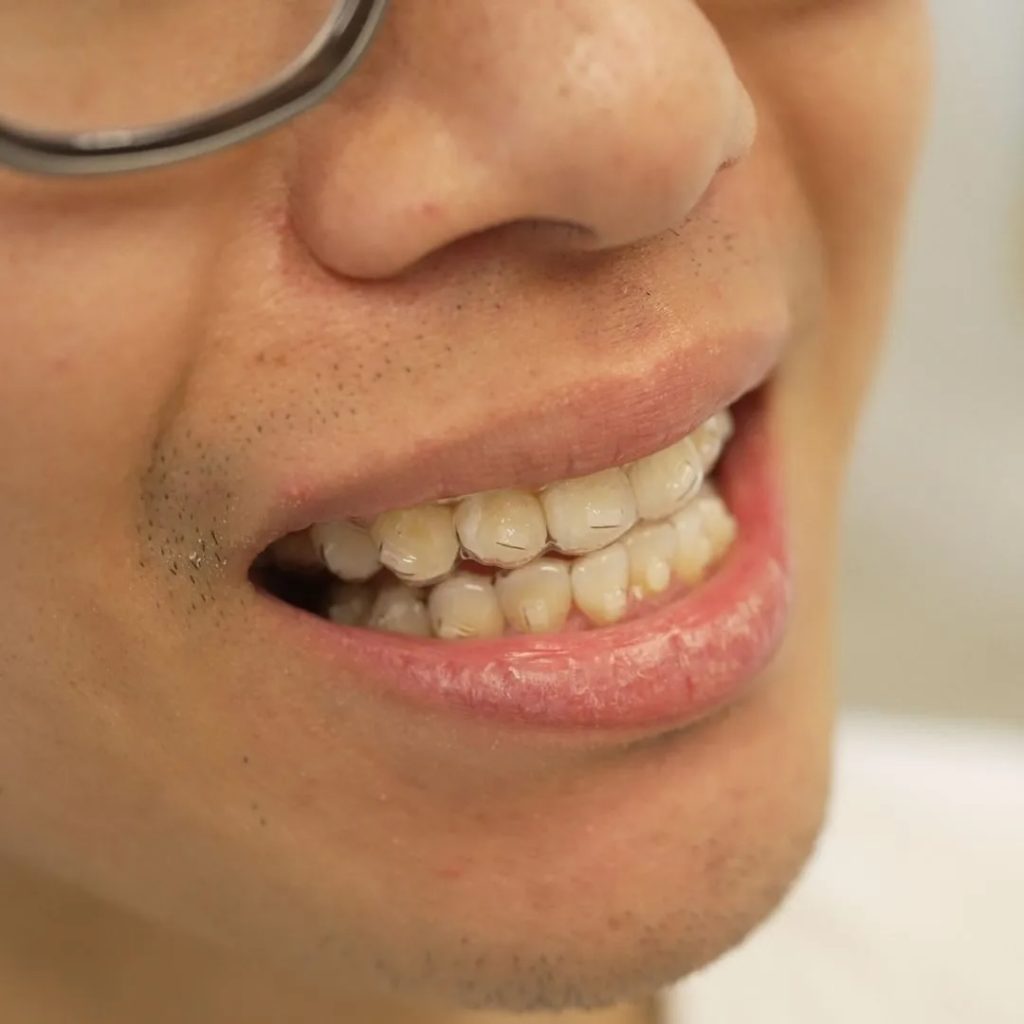
Although aligners cover the visible surfaces of the teeth, their ability to produce certain movements may depend on additional orthodontic components. Attachments are small shapes made from tooth-coloured composite material that can be bonded to selected teeth. They provide additional contact points between the appliance and the tooth, helping the aligner transmit forces in a more controlled manner.
The position, shape and number of these attachments depend on the movements required by the treatment plan. They may be particularly relevant when rotating teeth, controlling their inclination or achieving movements that are difficult to produce through the aligner alone. Personalised attachment design is therefore one of several clinical considerations that can influence the effectiveness of removable orthodontic appliances, particularly in more demanding cases.
Why might teeth not move exactly as predicted by the digital plan?
Orthodontic movement depends on a biological process involving the gradual remodelling of the bone surrounding the tooth roots. Although digital software can calculate proposed changes in tooth position, it cannot reproduce every aspect of an individual’s biological response. The movement achieved during each treatment stage may therefore differ from the original simulation.
Patient cooperation also plays an important role, as removable aligners must be worn according to the prescribed schedule. Insufficient wearing time, damaged appliances or difficulties with aligner fit may affect treatment progression. When discrepancies develop between the planned and actual tooth positions, the dental professional may recommend additional scans, changes to the appliance sequence or a refinement phase involving further aligners to address remaining discrepancies.
How can digital planning support more complex orthodontic cases?
Complex orthodontic cases may involve significant crowding, rotations, bite irregularities or movements requiring particularly careful control. Digital models allow dental professionals to study these relationships and evaluate whether different treatment strategies could be appropriate. However, the ability to simulate a movement digitally does not necessarily mean that it can be achieved safely or effectively using removable appliances alone.
The management of complex cases requires particular attention to the condition of the supporting tissues, the available space and the mechanical limitations of the chosen orthodontic system. Additional components or alternative orthodontic approaches may be necessary in certain circumstances. Individualised treatment planning remains essential, as the choice of appliance should be guided by clinical suitability rather than exclusively by aesthetic preferences or technological capabilities.
How are treatment results monitored with clear aligners in Kirkby Lonsdale in Cumbria?
Monitoring orthodontic progression involves assessing whether the teeth are moving in accordance with the treatment plan and whether the appliances continue to fit appropriately. Regular clinical reviews also provide an opportunity to examine gum health, tooth surfaces and changes in the patient’s bite. When indicated, updated digital scans can provide additional information about the relationship between the planned and achieved tooth positions.
At Lonsdale Dental Practice, intraoral scanning and digital visualisation contribute to the ongoing assessment of orthodontic treatment. Combined with the possibility of producing aligners in-house, these technologies can support adjustments to the treatment pathway when clinically necessary. Nevertheless, digital records remain complementary to professional examinations, and decisions concerning further tooth movements must take into account the patient’s overall oral health and individual treatment requirements.
Digital planning for clear aligners in Kirkby Lonsdale in Cumbria: combining technology with clinical assessment
The development of digital orthodontics has introduced additional possibilities for analysing dental alignment, visualising proposed movements and manufacturing personalised removable appliances. Its contribution extends throughout the treatment process, from the initial diagnostic records to the assessment of progress and the planning of any necessary refinements. However, technology alone cannot determine the success of orthodontic treatment, as biological response and patient cooperation remain fundamental considerations.
At Lonsdale Dental Practice, intraoral scanners, digital treatment simulations and in-house aligner production form part of an individualised approach to orthodontic care. The integration of these technologies with clinical experience and clear communication allows patients to develop a more informed understanding of their treatment objectives, the limitations of digital predictions and the importance of professional monitoring throughout the orthodontic journey.