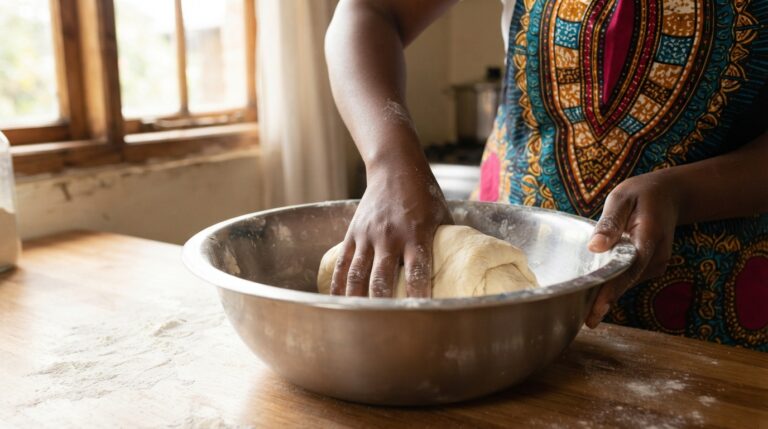
The five Moroccan spices worth keeping at home are cumin, paprika, ginger, saffron and the blend ras el hanout. All five appear on the list of spices used most widely in Moroccan food in Wikipedia’s Moroccan cuisine article, next to cinnamon, turmeric and coriander. Between them they cover the base of a tagine, a chermoula marinade for fish and most of the seasoning in harira soup.
Table Of Content
The five at a glance
This table is a quick reference. Each spice has its own section below with the dishes and sources.
| Spice | What it tastes like | Where it turns up in Moroccan cooking |
|---|---|---|
| Cumin | Warm and earthy | Tagines, couscous, the chermoula marinade |
| Paprika | Sweet or smoked, adds red colour | Stews, kebabs, salads, chermoula |
| Ginger | Spicy-sweet | Harira, tagines, the pastilla filling |
| Saffron | Floral, gives a golden colour | Tagines, harira, pastilla, chicken and fish |
| Ras el hanout | A warm mix that changes from shop to shop | Meat and fish rubs, couscous, rice, lamb tagines |
Flavour notes are from Genuine Morocco’s spice guide and the dish pairings from the sources linked in each section.
1. Cumin
Cumin has a warm, earthy taste that Genuine Morocco places in tagines, couscous and many spice blends, so it earns its place as the first jar on the shelf.
Its best-known use outside a tagine is chermoula, the marinade used in Moroccan, Algerian, Libyan and Tunisian cooking. Wikipedia’s chermoula entry lists garlic, cumin, coriander, oil, lemon juice and salt as the core, and says it is traditionally used on fish and seafood. Food Drink Destinations also suggests tossing cumin through couscous or using it in marinades for red meat and vegetables.
2. Paprika
Paprika brings colour as much as flavour. Genuine Morocco notes that both sweet and smoked types are used, in stews, kebabs and salads.
The Moroccan style of chermoula leans on paprika along with dried parsley, according to Wikipedia. Start with sweet paprika, then add a smoked one later if you like the taste.
3. Ginger
Ginger gives Moroccan stews a gentle, spicy-sweet warmth that Genuine Morocco links to soups and tagines. You will find it in three of the country’s best-known dishes:
- Harira, the tomato, lentil and chickpea soup, is seasoned with cinnamon, ginger, turmeric and saffron, per Wikipedia’s harira article. It is closely linked with Ramadan but is cooked all year.
- Tagines commonly use saffron, cumin, cinnamon, ginger and fresh coriander, according to Wikipedia’s Moroccan cuisine article.
- Pastilla, the savoury-sweet pie, has a meat filling seasoned with saffron, cinnamon and ginger, per Wikipedia’s pastilla article.
4. Saffron
Saffron is the dried red stigma and style of the crocus flower Crocus sativus, picked by hand. Wikipedia’s saffron article gives a sense of the work involved: one kilogram needs roughly 150,000 flowers, and the article puts the price often above US$5,000 per kilogram. Prices change, so check a current seller before you buy.
Moroccan saffron comes from Taliouine
Morocco grows its own saffron. Wikipedia’s Moroccan cuisine article lists saffron from Taliouine among the home-grown ingredients the country also exports. Taliouine is a town in the Souss-Massa region, and it holds a saffron festival every year, usually in November, when the crocus flowers.
How to use it
Saffron is usually steeped in hot water before it goes into a dish, according to Wikipedia. Steeping releases its yellow-orange colour into the liquid, which then tints the whole dish. Food Drink Destinations suggests it with chicken or fish and in rice dishes.
5. Ras el hanout
Ras el hanout is a ready-made spice blend, and its name means “head of the shop” in Arabic. Wikipedia and SBS Food both explain the name as a mix of the best spices the seller has to offer.
There is no fixed recipe. Each shop, company or family has its own blend, and sources give very different counts: Wikipedia’s Moroccan cuisine article says as many as 27 spices, while SBS Food says 30 to 35. Common ingredients include cardamom, cumin, clove, cinnamon, nutmeg, ginger, paprika, coriander seed and turmeric. Some blends add dried rosebuds or fennel seed, per Wikipedia.
Ways to use ras el hanout
- Rub it on meat or fish before cooking, or stir it into couscous or rice, as Wikipedia describes.
- Use it in a lamb tagine. SBS Food notes it works in sweet dishes as well as savoury ones.
- Toss it with vegetables before roasting, a use suggested by Food Drink Destinations.
Because every blend is different, taste a little before you add it. A blend heavy in chilli behaves very differently from one built on cinnamon and rose.
A sixth worth adding: cinnamon
If you have space for one more jar, make it cinnamon. Pastilla is finished with a dusting of powdered sugar and cinnamon, according to Wikipedia, and cinnamon is also in harira.
Food Drink Destinations separates the two forms: ground cinnamon goes into red meat dishes such as lamb shanks and meaty stews, while cinnamon sticks are more often used in desserts and milk tea.
Buying and storing Moroccan spices
Ground spices lose their smell over time, so a few habits keep them useful:
- Buy small amounts you will finish, rather than one big bag.
- Keep each spice in a closed jar away from the stove, a sunny window and steam.
- Smell before you cook. If a spice smells faint, it will taste faint.
- When you travel, the spice stalls in the souks of Marrakech are a good place to buy, as Genuine Morocco suggests. Ask the seller what goes into their ras el hanout, since every blend is different.
Sources
- Moroccan cuisine (Wikipedia)
- Ras el hanout (Wikipedia)
- Bring the spice stalls of a souk to your table with ras el hanout (SBS Food)
- Saffron (Wikipedia)
- Taliouine (Wikipedia)
- Chermoula (Wikipedia)
- Harira (Wikipedia)
- Pastilla (Wikipedia)
- The Best Moroccan Spices and Where to Find Them (Genuine Morocco)
- 7 Spices From Morocco To Add A Kick To Your Recipes (Food Drink Destinations)