Two weeks of travel fits in one cabin bag if you pack for about one week and plan to wash clothes once or twice along the way. The hard limits come from your airline, not from a universal rule, so the first job is to check the size and weight your carrier allows. After that, packing light is mostly about what you decide to leave behind.
Table Of Content
How big can a carry-on bag be?
There is no single world standard: each airline sets its own cabin bag limits. The International Air Transport Association (IATA) published a suggested “Cabin OK” size of 55 x 35 x 20 cm in 2015, but in a clarifying statement it said this is an optimum size, not a maximum, and that the limit is set by each airline. IATA’s Cabin OK FAQ adds that participating airlines were not asked to change their existing rules.
Weight is often the tighter limit. Here is what two major African carriers list on their own pages for economy passengers.
| Airline (economy) | Main cabin bag | Weight | Extra item |
|---|---|---|---|
| Kenya Airways | 1 piece, max L55 x W25 x H35 cm | 10 kg total on most routes; 12 kg total on EU, US and UK flights | 1 accessory (handbag, laptop, backpack and similar), max 40 x 15 x 30 cm, counted in the total |
| Ethiopian Airlines | 1 piece, max 23 x 40 x 55 cm | 7 kg | Personal accessories such as a handbag, laptop, coat or camera, up to 5 kg |
| IATA Cabin OK guideline | 55 x 35 x 20 cm | None set | Guideline only, not a limit |
Figures were taken from each airline’s website in October 2026. Allowances change, and they can differ by fare and route, so check the official site before you book. Kenya Airways also says every cabin bag must carry an “approved KQ cabin luggage” label.
A bag built to the Cabin OK size fits inside both airlines’ listed dimensions on paper. The 7 kg Ethiopian limit is the one most likely to catch you out, so weigh the packed bag at home.
What should you pack for 14 days?
Pack clothes for roughly seven days and plan to wash. Travel writer Rick Steves puts it plainly in his tips for traveling light: “You don’t need new underwear and socks for each day.” He suggests one suitcase and one day bag, and doing laundry every few days.
A list that works for most two-week trips:
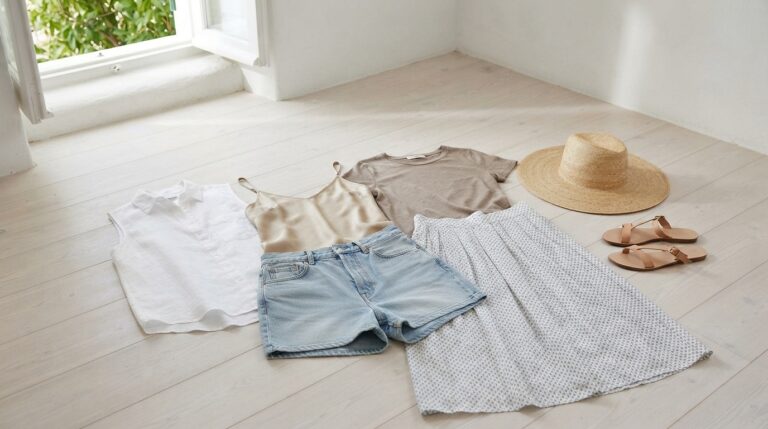
- Tops and bottoms that all match each other, so every piece can be worn with every other piece
- Underwear and socks for about a week
- One light jacket or warm layer for planes, buses and cool evenings
- One pair of comfortable walking shoes, worn on the plane, plus light sandals
- Sleepwear that can double as lounge clothes
- A small toiletry kit in travel-size containers
- Phone, charger, a universal plug adapter and a power bank
- A packable day bag for outings
Rick Steves advises bringing “one pair of practical shoes” with good soles and only adding a second pair if it is light. Shoes take up more room than almost anything else in the bag, so this one choice frees the most space.
What should you leave at home?
Leave out anything you are packing “just in case”. Steves’ rule is to “pack for the best scenario, not the worst” and to buy what you need locally if the need comes up.
Full-size toiletries
Big bottles are the first thing to drop, because liquid rules at security limit them anyway. The UK government’s liquids guidance says that at most UK airports liquids must be in containers of 100 ml or less, packed in a single transparent resealable bag that holds no more than a litre and measures about 20 x 20 cm. It also says the rules depend on the airport: some UK airports now allow containers of up to 2 litres. Check the rules at your departure airport and at every airport where you connect, since they may not match.
Other common dead weight
- A second jacket when one warm layer will do
- Printed guidebooks you can replace with notes or an e-book on your phone
- Outfits for one specific event that you will wear once
- Duplicate gadgets, such as a second camera when your phone takes the photos you need
How do you do laundry on the road?
Wash small loads in a sink every few days, or hand a bag to a laundry service. Rick Steves lists three options: pay the hotel, wash in your sink, or use a launderette like a local.
For sink washing, AARP gives these steps:
- Fill the sink with cold water, which it says prevents shrinking and fabric damage
- Add a small amount of detergent, swirl the clothes and let them soak for 10 to 15 minutes
- Drain, then rinse in cool water until the detergent is gone
- Squeeze out the water without twisting the fabric
- Lay the clothes on a dry towel, roll the towel up and press down to take out more water
- Hang everything in a well-ventilated spot to dry
Wash in the evening so clothes have the whole night to dry, and check the forecast before you rinse heavy items in humid weather. Fabric choice helps here. In an Associated Press report, textile researchers explained that cotton absorbs sweat but gets heavy when saturated, while engineered polyester moves moisture across the fabric and dries more quickly.
How should you pack the bag itself?
Wear your heaviest items on travel days and pack everything else in groups. Your walking shoes and warm layer weigh nothing in your allowance if they are on your body, which matters most with a 7 kg limit.
- Roll soft clothes and fill shoes with socks or chargers
- Use a couple of pouches or bags to keep tops, underwear and electronics apart, so you can find things without unpacking
- Keep the liquids bag and laptop near the top for the security check
- Leave a little space for things you buy on the trip
Weigh the bag again before the flight home. Souvenirs and a new shirt or two add up quickly, and the same airline limits apply on the return flight.
Sources
- IATA: Aclaración de la IATA sobre la iniciativa Cabin OK (press release, 12 June 2015)
- IATA: Responses to frequently-asked questions on the new IATA Cabin OK optimum bag size guidelines
- Kenya Airways: Hand Baggage
- Ethiopian Airlines: Carry on Baggage
- GOV.UK: Hand luggage restrictions at UK airports, liquids
- Rick Steves: Top Tips for Traveling Light
- AARP: How to Wash Your Clothes While Traveling
- The Associated Press via WTOP: The best fabric for extreme heat? It’s more complicated than you think (18 August 2026)